Orthodontic appliances are crucial in correcting dental and jaw alignment issues, particularly in children and adolescents. While traditional braces and Invisalign focus on moving teeth into proper alignment, certain appliances are designed to address structural concerns, such as jaw expansion.
The Rapid Palatal Expander (RPE) commonly used orthodontic appliances. Rapid Palatal Expanders (RPEs) help widen the upper jaw to correct bite problems. These treatments create the foundation for a properly aligned smile and can reduce the need for extensive orthodontic treatment later in life.
We specialize in customized orthodontic appliances at Mid Peninsula Orthodontics in Palo Alto, CA to ensure optimal dental development and bite correction.
Signs That an Orthodontic Appliance May Be Needed
If you or your child experience any of the following concerns, an orthodontic appliance may be recommended:
- Narrow upper jaw causing a crossbite or crowding
- Overlapping or crowded teeth with insufficient space for proper alignment
- Difficulty chewing or breathing due to a small or restricted airway
- Early loss of baby teeth, leading to shifting of permanent teeth into incorrect positions
- Severe bite misalignment affecting jaw growth and function
- Gaps in teeth due to missing teeth that need to be preserved for proper future alignment
Early intervention with orthodontic appliances can prevent more extensive treatment later in life, such as tooth extractions or jaw surgery.
Why Orthodontic Appliances Are Essential for Dental Development
Orthodontic appliances like Rapid Palatal Expanders (RPEs) ensure proper dental and skeletal development. The upper jaw, or palate, is still malleable in children and can be gradually expanded using an Rapid Palatal Expander (RPE). This allows for better tooth alignment and a properly functioning bite. Without intervention, a narrow palate can contribute to crowding, crossbites, and even breathing issues such as sleep apnea.
Using orthodontic appliances at the right time can guide proper oral development, reduce the risk of more invasive procedures, and improve long-term dental health.
The Process of Using an Orthodontic Appliance
The treatment process varies depending on the specific appliance being used. Here’s what to expect for both Rapid Palatal Expanders (RPEs):
Rapid Palatal Expander (RPE)
- Initial Consultation and Evaluation: Using digital scans or X-rays, the orthodontist will assess your child’s jaw width and bite. If a narrow upper jaw is identified, an Rapid Palatal Expander (RPE) will be recommended.
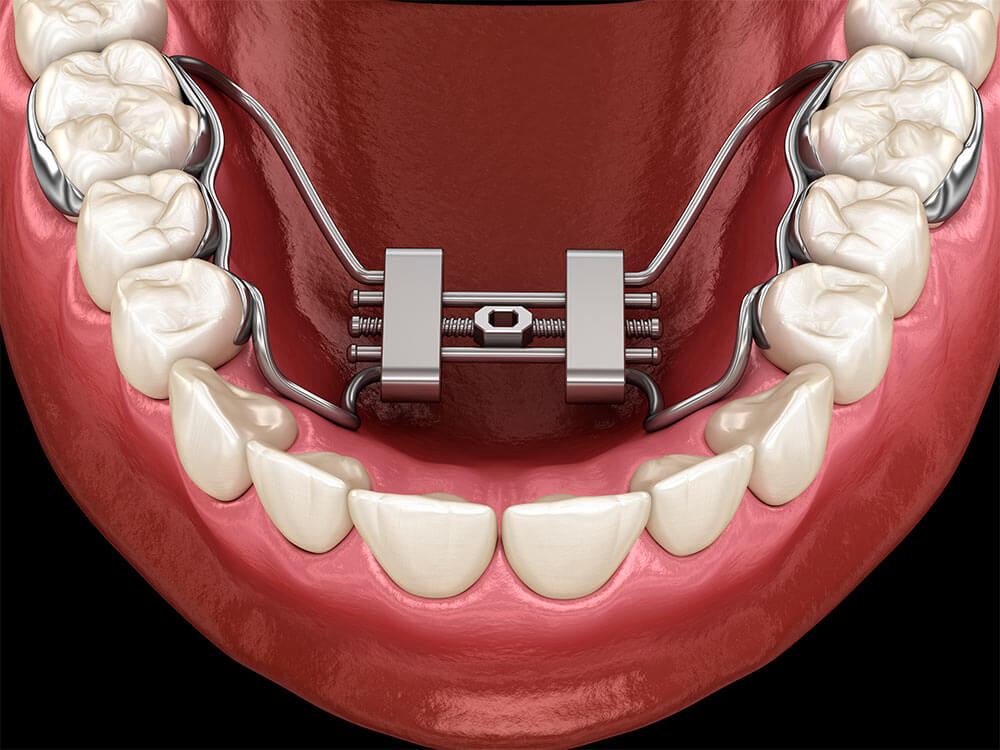
- Custom Appliance Fabrication: A mold or digital impression is taken to create a custom Rapid Palatal Expander (RPE) designed to fit the roof of the mouth. The appliance consists of a metal framework that attaches to the upper molars.
- Appliance Placement and Activation: The Rapid Palatal Expander (RPE) is cemented in place and features a central screw mechanism that requires gradual activation. Parents are given instructions on how to turn the screw using a key to widen the palate over several weeks gently.
- Monitoring Progress: Patients visit the orthodontist regularly to ensure expansion is progressing correctly. Once the desired width is achieved, the appliance remains in place for a few months to allow the bones to stabilize.
- Completion and Retainer Use: After the expansion phase, a retainer or additional orthodontic treatment may be recommended to maintain the results.
How to Maintain Oral Health with an Orthodontic Appliance
Proper care of orthodontic appliances is essential for maintaining oral health and ensuring successful treatment.
- Brush thoroughly around the appliance to prevent plaque buildup and irritation.
- Use floss threaders or water flossers to clean under wires and around bands.
- Avoid sticky or hard foods that could damage the appliance, such as gum, caramel, or popcorn.
- Follow the orthodontist’s instructions for activation and care, especially for Rapid Palatal Expander (RPE) adjustments.
- Attend regular dental and orthodontic checkups to monitor progress and make necessary adjustments.
- Contact your orthodontist immediately if the appliance feels loose or broken.
What to Expect After Treatment with an Orthodontic Appliance
Once an Rapid Palatal Expander (RPE) has served its purpose, patients will experience improved jaw structure, better tooth alignment, and a more functional bite. Expansion achieved through an Rapid Palatal Expander (RPE) creates sufficient space for teeth to align correctly, reducing the likelihood of crowding or the need for extractions in the future.
With early intervention and the right orthodontic appliance, patients can achieve long-lasting oral health benefits, improved facial symmetry, and a more stable smile.
Frequently Asked Questions About Orthodontic Appliances
An Rapid Palatal Expander (RPE) is most effective between ages 7 and 14, when the upper jaw is still developing.
Mild discomfort or pressure is normal after activating the expander, but this usually subsides within a few days. Over-the-counter pain relievers and soft foods can help manage any temporary soreness.
Rapid Palatal Expanders (RPEs) are primarily used in children and adolescents because their jawbones are still developing. In adults, jaw expansion may require surgical intervention in combination with orthodontic treatment.
Ensure a Healthy Smile with Early Orthodontic Intervention
If your child has a narrow upper jaw, crowding, or early tooth loss, orthodontic appliances like Rapid Palatal Expanders can significantly affect oral health. At Mid Peninsula Orthodontics in Palo Alto, CA, we provide expert care and customized treatment plans to ensure proper dental development and long-term alignment.
Schedule a consultation today to learn more about how orthodontic appliances can support a healthier, more confident smile.
Rapid Palatal Expander (RPE)
A palate expander (Phase I treatment) is an appliance that widens the upper jaw. This widening or “expansion” is usually indicated to correct an upper jaw that is too narrow with a malocclusion called a “crossbite.” The upper jaw can also be widened to create additional space for crowded or blocked out teeth.
The appliance has a screw-type mechanism that is turned with a special key that we provide. It can be turned by either the patient or parent. You may notice that a space develops between the upper front teeth during the expansion. This will close after the widening is complete. Once the necessary expansion is achieved, the expander is left in place to stabilize the correction. It will be kept until more permanent teeth are in and patient is continuously nose breathing.
Over 250 Five-Star Reviews
Patient Testimonials
“I have known Dr. Quo personally and professionally for over 10 years. She has helped both of my kids (9 and 12) with expansion that resulted in better smiles, sleep, and improved academics. As a fellow sleep physician, I cannot recommend any other group more. A huge thanks!”

Verified Patient
4/4/2024
“Doctor Quo and her team were all very knowledgeable, caring, and friendly. Doctor Quo’s knowledge on sleep apnea helped improve my breathing and quality of sleep a lot. Thank you Doctor Quo!”

Verified Patient
8/15/2021
“Dr. Quo is just amazing on every level. She was highly recommended and works closely with the Stanford Sleep Clinic. My 8 year old had severe sleep apnea, and after getting tonsils and adenoids removed, was one of the few not cured. Dr. Quo expanded her palette to create more room. Couldn't be happier, and feel so fortunate to have found her. Just can't say enough positive things about her.”

Verified Patient
7/6/2017

4.9 (272 Reviews)
4.5 (105 Reviews)
5.0 (11 Reviews)